
How to Verify Yacht Charter Availability in 2026
Table of Contents
- Why Yacht Charter Availability Gets Faked
- Step 1: Confirm Live Availability Before You Inquire
- Step 2: How Yacht Charter Broker Verification Works
- Step 3: How to Spot an Illegal Yacht Charter
- Step 4: Yacht Charter Contract Essentials to Review
- Step 5: Verify Insurance, Crew, and Safety Standards
- Step 6: Secure Your Booking with a Deposit and Escrow
- Frequently Asked Questions
Last Updated: October 2, 2026
Why Yacht Charter Availability Gets Faked
Most charter listings you see online are not live. They are stale calendars, scraped from broker databases weeks or months ago. That gap between what a site shows and what a yacht can actually deliver is where deposits get lost and vacations fall apart.
Learning how to verify yacht charter availability is the single best defense against that. This guide walks through the exact steps to confirm a vessel is genuinely open before anyone sends money.
The problem is structural. A listing site earns money when you fill out an inquiry form, not when you get on the water. So the incentive is to show every yacht as available and sort out the truth later.
Yacht charter availability is the confirmed status of a specific vessel for specific dates, verified against the owner or management company's own booking system. It is not the same as a listing appearing on a website.
That distinction matters more than most travelers realize.
Step 1: Confirm Live Availability Before You Inquire
Start by asking one direct question: is this yacht open for my exact dates, right now? A serious operator answers in hours, not days. Vague replies like "we'll check" are a warning sign.
Here is how to confirm availability the right way:
- Give exact dates, not a rough window
- Name the yacht by its full registered name
- Ask who holds the booking calendar
- Request written confirmation, not a verbal yes
- Ask how long the vessel will be held
Real-Time API vs. Manual Broker Verification
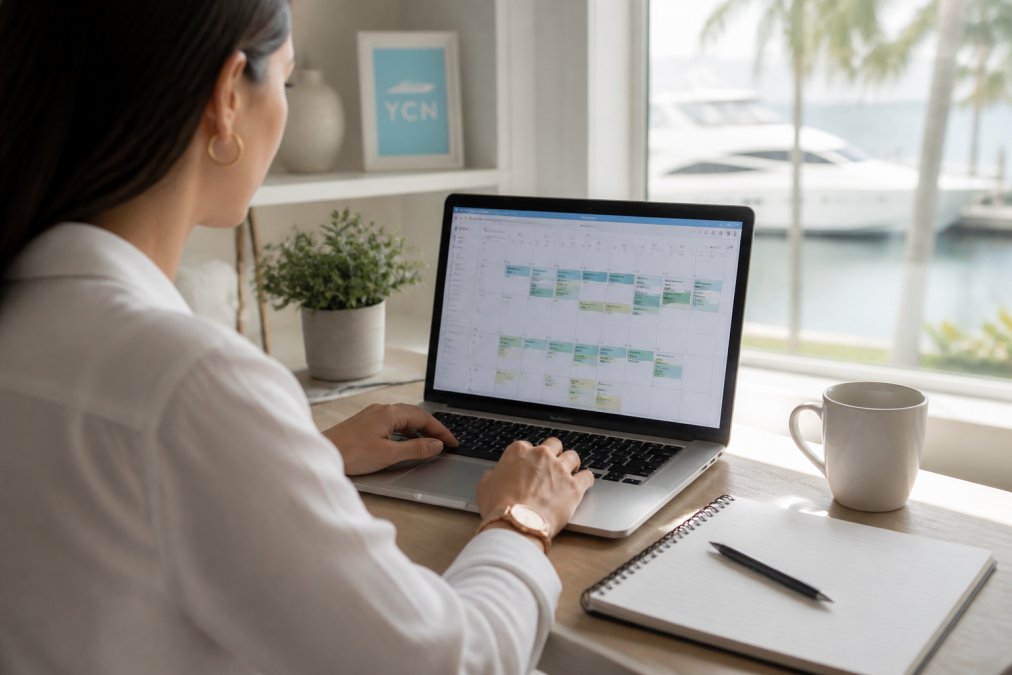
Real-time API verification pulls availability straight from the owner's booking system. Manual verification means a broker calls or emails the management company and waits.
The first is faster and harder to fake. The second still works, but it depends entirely on how honest the broker is.
At YCN, live availability is built into every listing, so the calendar you see reflects the vessel's actual status.
Step 2: How Yacht Charter Broker Verification Works
Yacht charter broker verification means confirming that the person or company arranging your charter is licensed, insured, and actually authorized to book the vessel. Skip this step and you are trusting a stranger with a large deposit.
Run these checks before you commit:
- Ask for the brokerage's legal business name
- Confirm membership in a recognized industry association
- Check that the broker is authorized to represent the specific yacht
- Verify the broker's escrow arrangements
Checking Licenses and Industry Memberships
A legitimate brokerage belongs to at least one professional charter association. Membership is not proof of quality, but its absence is a real red flag.
Ask for the membership number and verify it directly with the association. This takes five minutes and has saved plenty of travelers from fraud.
The Federal Trade Commission's consumer guidance on avoiding scams is a useful starting point for spotting the patterns that show up in charter fraud too.
Step 3: How to Spot an Illegal Yacht Charter
An illegal charter is a vessel operating commercially without the proper registration, inspections, or crew credentials. These trips put passengers at real risk and often leave them with no legal recourse if something goes wrong.
The signs are usually visible before you pay:
- The owner avoids questions about commercial registration
- The price is far below every comparable yacht
- There is no written contract, only a text thread
- The crew cannot produce credentials on request
- Payment is requested by wire to a personal account
Coast Guard Documentation and Commercial Registration
In the United States, a vessel carrying paying passengers must meet specific requirements set by the U.S. Coast Guard boating safety standards. A yacht used for private pleasure does not need the same paperwork as one used commercially.
Ask for the vessel's official number and look it up. A real commercial operator will hand it over without hesitation. If the answer is "we don't share that," walk away.
Step 4: Yacht Charter Contract Essentials to Review
Yacht charter contract essentials are the terms that decide what happens when plans change, who pays for what, and where disputes get resolved. Read every line before you sign.
Your agreement should clearly state:
| Contract Item | What It Should Say | Why It Matters |
|---|---|---|
| Charter dates | Exact start and end times | Prevents scheduling disputes |
| Total cost | Base rate plus all fees listed | Stops surprise charges later |
| Cancellation policy | Refund terms and deadlines | Protects your deposit |
| Delivery and redelivery | Named ports and times | Defines where the trip begins |
| Liability and insurance | Who covers what | Sets responsibility if damage occurs |
Red Flags in Charter Agreements
Watch for vague language. Phrases like "subject to availability" or "fees may apply" let the operator change terms after you pay.
Other warning signs include:
- No named vessel, only "a yacht of similar class"
- Cancellation terms that favor only the operator
- No mention of who holds the deposit
- Missing dispute resolution clause
A clean contract names the yacht, the dates, the total cost, and the refund rules. Anything less deserves a follow-up question.
Step 5: Verify Insurance, Crew, and Safety Standards
Insurance and crew checks confirm that the vessel is covered and the people running it are qualified. This is where a lot of informal charters fall short.
Ask for three things in writing:
- Vessel insurance certificate showing commercial coverage
- Captain's license and crew credentials
- Safety equipment list, including life jackets and fire gear
A professional captain holds a valid license and can explain the vessel's safety systems without hesitation. If the crew cannot answer basic questions about emergency procedures, that tells you plenty.
This is the step most travelers skip, and it is the one that matters most when something goes wrong at sea.
Step 6: Secure Your Booking with a Deposit and Escrow
A deposit should go into an escrow account, not a personal bank account. Escrow means a neutral third party holds the money until the charter terms are met by both sides.
Here is how a safe booking flow works:
- Sign the charter agreement
- Send the deposit to a named escrow account
- Get written confirmation the funds were received
- Receive the vessel's provisional hold details
- Pay the balance on the schedule in the contract
A provisional hold reserves the yacht for a short window while paperwork is finalized. Ask how long the hold lasts and what happens if it expires.
YCN handles this part for you. Deposits move through proper channels, and every yacht in the fleet carries live availability.
Frequently Asked Questions
Do online yacht availability calendars reflect real-time status?
Not always. Some charter platform calendars update in real time through API connections to central booking systems, while others are refreshed manually once a day or less. A calendar showing 'available' does not guarantee the yacht is unbooked; it may already be on a provisional hold. Always confirm availability directly with the broker or platform before paying any deposit. If a listing has no live availability feature, treat the dates as unverified until you receive written confirmation from the operator.
How do I confirm a yacht is legally permitted to charter?
Ask for the vessel's Coast Guard documentation and proof of commercial registration. A yacht legally available for charter in U.S. waters must hold a valid Certificate of Inspection or demonstrate compliance with applicable regulations for its size and route. You can verify the vessel's official number through the Coast Guard's documentation search. If the operator cannot produce these documents or redirects you to a third party without explanation, that is a serious warning sign. Legitimate charter companies provide this information without hesitation.
What documents should I request to verify a yacht's charter status?
Request four items: the vessel's Coast Guard documentation or official number, the charter agreement with the owner or management company's name, proof of insurance covering charter use, and crew credentials for the captain. Cross-check the owner's name against the listing. If the person asking for your deposit is not the registered owner or an authorized central agent, pause. A legitimate broker or platform will share these documents as part of standard due diligence before you commit funds.
What are common red flags in a yacht charter contract?
Watch for missing cancellation terms, vague language around additional costs like APA or gratuities, no named vessel or owner, and clauses that allow the operator to substitute a different yacht without your approval. Legitimate contracts specify the exact vessel, dates, embarkation and disembarkation points, and the total cost breakdown. If a contract references 'similar vessel' substitutions or omits an escrow arrangement for your deposit, ask for clarification in writing before signing. Any pressure to pay outside a traceable method is a deal-breaker.
Verifying a charter takes an hour of careful questions, and it protects a trip you may have planned for months. The work is worth it.
If you would rather skip the guesswork, YCN makes it simple. Every yacht in the fleet shows live availability, our team confirms broker and vessel details on your behalf, and we handle escrow, contracts, and crew checks in one place. Get a quote from YCN and book with confidence.





Leave a comment
This site is protected by hCaptcha and the hCaptcha Privacy Policy and Terms of Service apply.